
Popular on Rezul
- 303 Crown Maids Enhances Standard Cleaning Service for Consistent Home Upkeep
- 303 Crown Maids Launches Enhanced Move-In / Move-Out Cleaning Service Page
- Studica Robotics Supports Robotics Training Camp for WorldSkills Shanghai 2026
- Boston Industrial Solutions Launches New Citrine® SA1-370 Silicone Glue for Permanent Adhesion
- Cre8ive Realty Breaks Down Florida's 2026 Real Estate Updates for Florida Buyers and Sellers
- Heritage at Manalapan Introduces Luxury Single-Family Homes with Exceptional Value in One of Monmouth County's Most Desirable Locations
- Award-Winning Heritage at South Brunswick Continues to Thrive as One of New Jersey's Premier New Home Communities
- Tour, Save, and Win at O'Dwyer Homes Communities Across Metro Atlanta
- WhereTu Launches to Help Americans Build Successful Lives Abroad
- Beat the Philly Heat: Mid-July AC Boost
Similar on Rezul
- Tickeron Highlights AI Trading Agent Performance Across Multiple Market Sectors
- Stop Bleeding Cash on Mediocre Talent. Build a Powerhouse Remote Team Instead
- Crownlight Strategies® Announces Federal Trademark Registration
- New Book Calls 'Sense of Belonging' the Missing Link in Student Success
- KT Medical Staffing Addresses the Questions Families Forget to Ask Before Bringing Private Nursing Care Home
- Private Autopsies Give Arizona Families Answers After Nursing Home and Care Facility Deaths
- OPUS Global Data Solutions Launches Food Trader Plus, Bringing Operational Control and Deal-Level Profit Visibility to Food Brokers
- Michael Maertens Hired as Century Fasteners Corp. – Chief Financial Officer
- Bent Danholm's The Architecture of Demand Reaches No. 2 in Amazon Real Estate Sales
- Contracting Resources Group Named to Inc. 5000 for the Ninth Time
Ascent Solar Technologies (N A S D A Q: ASTI): Positioned at the Intersection of the New Space Economy, Defense Innovation and Next-Generation Energy
Rezul News/10739096
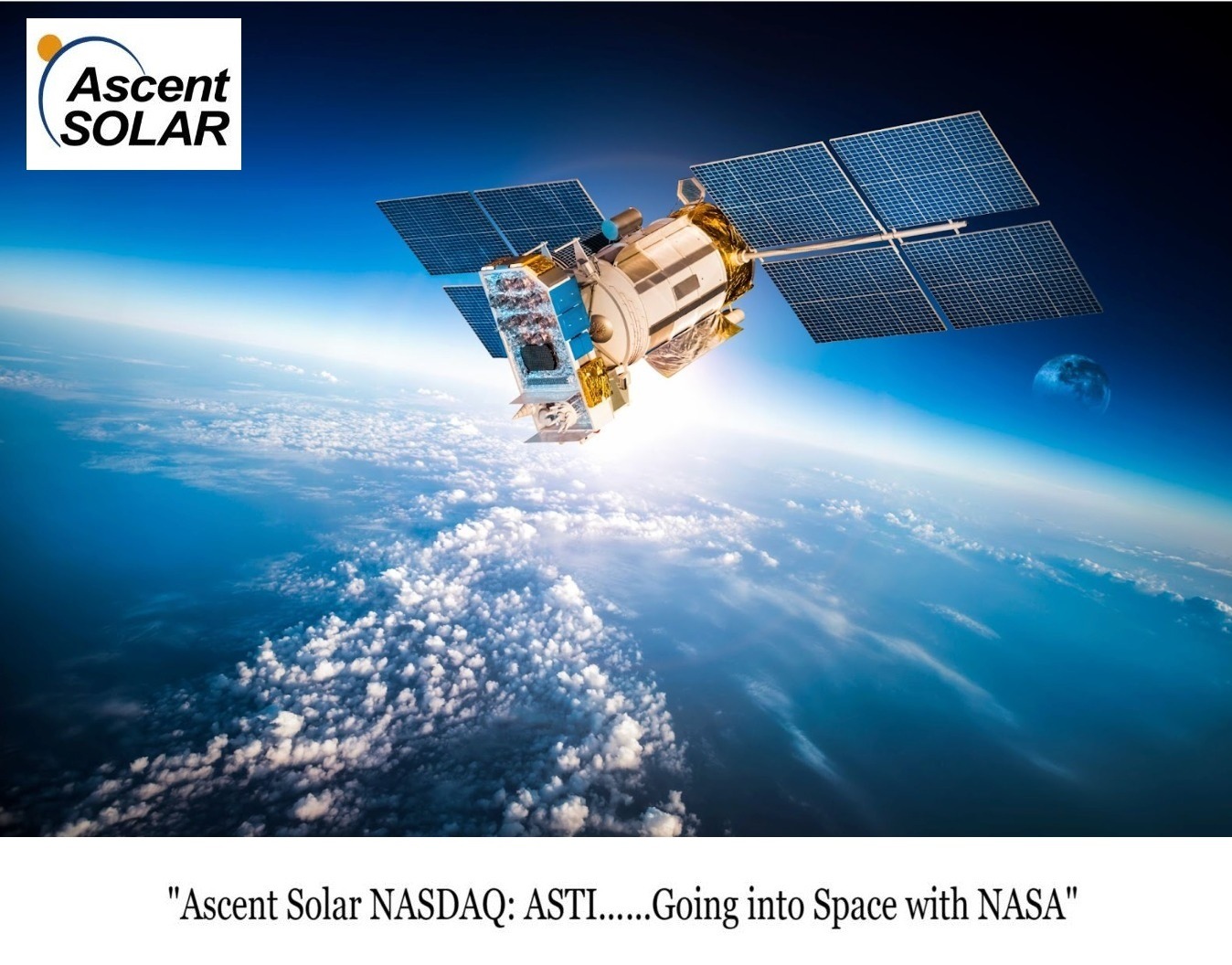
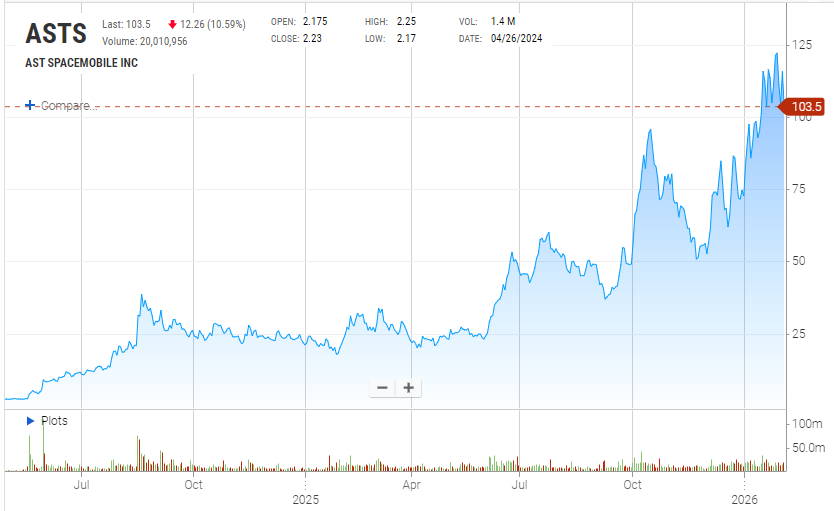
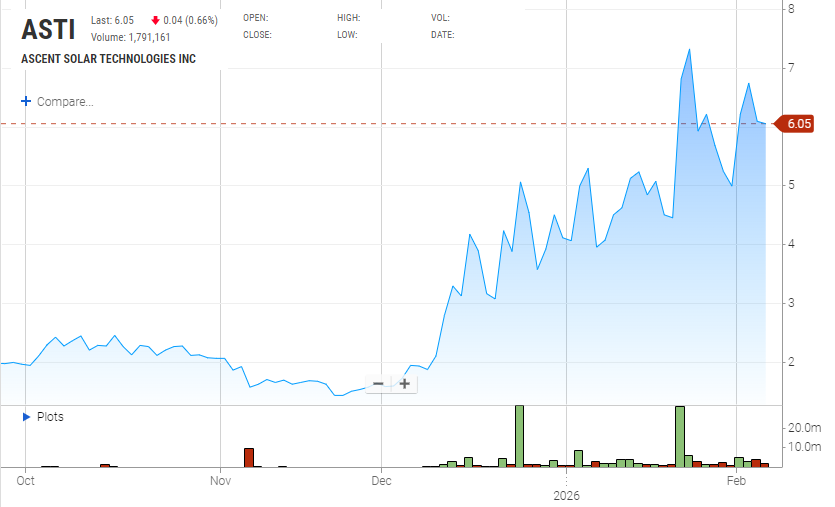
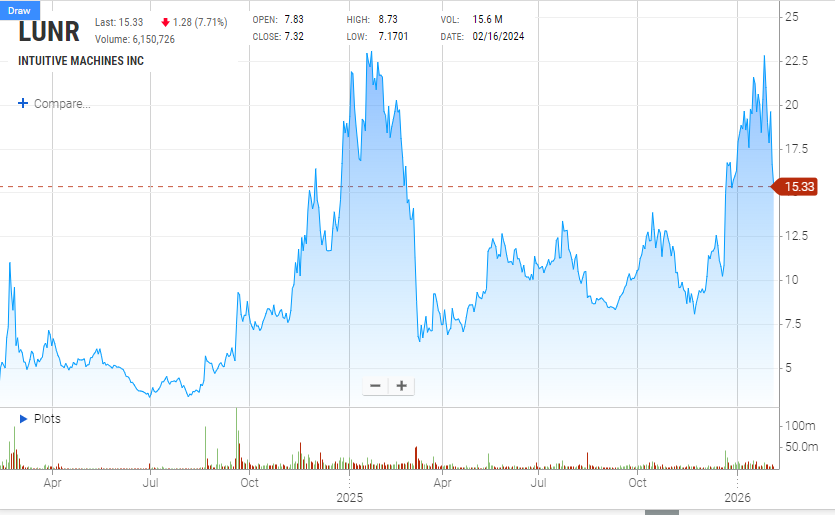
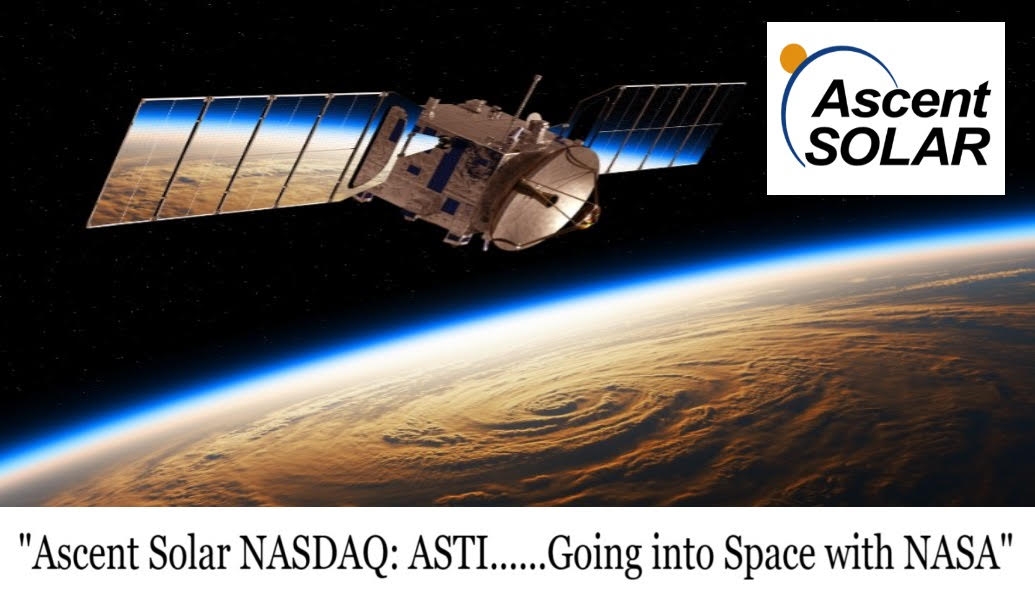

From Space Force initiatives and NASA collaborations to commercial satellite constellations, autonomous systems and advanced defense applications, Ascent Solar, $ASTI continues expanding the real-world deployment of its proprietary lightweight thin-film solar technology.
THORNTON, Colo. - Rezul -- As governments and private industry commit trillions of dollars toward space exploration, national defense modernization, lunar infrastructure, satellite constellations, orbital manufacturing, and eventually Mars missions, a new generation of enabling technologies is beginning to emerge as critical components of this rapidly expanding ecosystem.
Among those companies attracting increasing attention is Ascent Solar Technologies, Inc. (N A S D A Q: ASTI), a U.S. innovator whose proprietary thin-film photovoltaic technology is designed for environments where traditional rigid solar panels simply cannot perform.
Backed by more than four decades of research and development, 15 years of manufacturing experience, a substantial intellectual property portfolio, and an expanding list of commercial and government partnerships, Ascent Solar is positioning itself as a unique supplier of lightweight, flexible power solutions for some of the world's fastest-growing industries.
Unlike conventional silicon solar panels, Ascent's Copper Indium Gallium Selenide (CIGS) photovoltaic technology is lightweight, flexible, rollable, durable and engineered for demanding applications across space, aerospace, defense, marine, unmanned systems and specialized commercial markets.
Today's Announcement Highlights Technology Built for Space
On June 29, Ascent Solar announced encouraging preliminary results from Atomic Oxygen (AO) exposure testing of its space-grade thin-film photovoltaic products. The testing demonstrated zero measurable power degradation after exposure equivalent to approximately six months in Low Earth Orbit, one of the harshest environments encountered by spacecraft.
Atomic Oxygen is widely recognized as one of the most destructive environmental factors affecting spacecraft operating in Low Earth Orbit. It gradually erodes protective materials, damages electrical components and reduces the long-term performance of conventional solar arrays.
For satellite operators and spacecraft manufacturers, durability translates directly into mission longevity and reduced replacement costs.
According to CEO Paul Warley, the successful testing further validates Ascent's technology as a compelling solution for orbital power systems as commercial space infrastructure continues to expand. The company plans additional testing designed to simulate even longer mission durations.
Space Industry Momentum Continues to Accelerate
The commercial space economy continues to experience unprecedented growth.
Government agencies including NASA, the U.S. Space Force and international partners are investing heavily in next-generation spacecraft, while private companies continue deploying satellite constellations, communications infrastructure, Earth observation platforms and future orbital data centers.
More on Rezul News
Virtually every spacecraft requires lightweight, highly efficient electrical power generation, creating a significant opportunity for advanced photovoltaic technologies.
Because Ascent's solar arrays can be rolled into compact launch configurations while delivering high power output once deployed, the technology offers attractive advantages over conventional rigid panel designs.
The company's lightweight architecture also reduces launch mass—one of the most valuable cost-saving characteristics in modern spaceflight.
Powering the NOVI AI Pathfinder Mission
One of Ascent's most visible commercial achievements this year involves its collaboration with NOVI Space.
Earlier this year, the company announced that its flexible photovoltaic blankets had been successfully integrated into NOVI's Pathfinder spacecraft, scheduled to launch aboard a SpaceX Falcon 9 Transporter mission.
The toaster-sized spacecraft is expected to generate approximately 150 watts of power using Ascent's rollable solar blanket technology—power levels often associated with considerably larger and more expensive spacecraft.
The Pathfinder mission represents another real-world validation of Ascent's technology as commercial satellite developers increasingly seek smaller, lighter and more capable spacecraft.
Advancing Space-Based Power Beaming
Another area where Ascent continues to differentiate itself is the emerging field of space-based power beaming.
The company has been developing advanced CIGS photovoltaic modules capable of receiving distributed power from multiple transmission sources while continuing its collaborative work with NASA's Marshall Space Flight Center and Glenn Research Center.
As orbital energy transmission concepts continue to evolve, Ascent believes its thin-film technology could play an important role in future space-based power architectures.
These initiatives are supported by the company's in-house manufacturing capabilities at its Thornton, Colorado production facility, allowing rapid design iterations and commercialization of new technologies.
Strategic Partnerships Continue to Expand
Rather than relying on a single customer or market, Ascent has steadily expanded relationships across multiple high-growth industries.
Recent strategic collaborations include:
These partnerships diversify potential revenue opportunities while positioning the company across several sectors expected to benefit from increasing government and commercial investment.
Manufacturing Infrastructure Already in Place
Unlike many early-stage technology companies that still depend upon outside manufacturers, Ascent operates its own research and development center together with a 5-megawatt production facility in Thornton, Colorado.
More on Rezul News
This manufacturing capability provides greater control over product development, quality assurance and production timelines while allowing the company to respond more quickly to specialized customer requirements.
Management has emphasized rapid delivery capabilities for customized space-qualified photovoltaic products, an increasingly important competitive advantage as satellite launch schedules continue accelerating.
Strengthening the Balance Sheet
Earlier this year, Ascent completed a private placement that generated approximately $10 million in initial gross proceeds, with the potential for total proceeds to reach approximately $25 million through warrant exercises.
The financing provides additional working capital to support manufacturing expansion, technology development and commercial growth initiatives while positioning the company to pursue increasing demand across multiple industries.
Looking Toward 2026 and Beyond
Management has outlined ambitious commercial expectations, projecting 2026 revenue in the range of approximately $5 million to $20 million, followed by potential revenue growth into the $25 million to $40 million range during 2027 as commercial deployments expand.
While those projections remain subject to execution and market conditions, the company continues adding strategic partnerships, validating its technology through real-world deployments and expanding applications well beyond traditional solar markets.
Investment Perspective
Ascent Solar represents a company operating within several of today's most compelling long-term investment themes: commercial space expansion, national defense modernization, advanced satellite technology, autonomous systems, lightweight energy solutions and next-generation aerospace manufacturing.
Its proprietary CIGS thin-film photovoltaic technology addresses challenges that conventional solar panels cannot, particularly where weight, flexibility, durability and resilience determine mission success.
Today's successful Atomic Oxygen testing further strengthens the company's technical credibility and reinforces its positioning within the growing space economy.
Although Ascent Solar remains an emerging growth company and investors should recognize the risks associated with developing commercial technologies, the combination of proprietary intellectual property, expanding strategic partnerships, operational manufacturing capabilities, increasing validation from customers, NASA collaborations and exposure to multiple high-growth industries makes N A S D A Q: ASTI a company that many growth-oriented investors may continue watching closely as commercialization efforts accelerate over the coming years.
For more information on $ASTI visit: https://www.ascentsolar.com https://compasslivemedia.com/asti/
Media Contact
Company Name: Ascent Solar Technologies, Inc (N A S D A Q: ASTI)
Contact Person: Paul Warley, CEO
Email: sales@ascentsolar.com
Phone: (720) 872-5000
Country: United States
Website: https://www.ascentsolar.com
DISCLAIMER: https://corporateads.com/disclaimer/
Disclosure listed on the CorporateAds website
Among those companies attracting increasing attention is Ascent Solar Technologies, Inc. (N A S D A Q: ASTI), a U.S. innovator whose proprietary thin-film photovoltaic technology is designed for environments where traditional rigid solar panels simply cannot perform.
Backed by more than four decades of research and development, 15 years of manufacturing experience, a substantial intellectual property portfolio, and an expanding list of commercial and government partnerships, Ascent Solar is positioning itself as a unique supplier of lightweight, flexible power solutions for some of the world's fastest-growing industries.
Unlike conventional silicon solar panels, Ascent's Copper Indium Gallium Selenide (CIGS) photovoltaic technology is lightweight, flexible, rollable, durable and engineered for demanding applications across space, aerospace, defense, marine, unmanned systems and specialized commercial markets.
Today's Announcement Highlights Technology Built for Space
On June 29, Ascent Solar announced encouraging preliminary results from Atomic Oxygen (AO) exposure testing of its space-grade thin-film photovoltaic products. The testing demonstrated zero measurable power degradation after exposure equivalent to approximately six months in Low Earth Orbit, one of the harshest environments encountered by spacecraft.
Atomic Oxygen is widely recognized as one of the most destructive environmental factors affecting spacecraft operating in Low Earth Orbit. It gradually erodes protective materials, damages electrical components and reduces the long-term performance of conventional solar arrays.
For satellite operators and spacecraft manufacturers, durability translates directly into mission longevity and reduced replacement costs.
According to CEO Paul Warley, the successful testing further validates Ascent's technology as a compelling solution for orbital power systems as commercial space infrastructure continues to expand. The company plans additional testing designed to simulate even longer mission durations.
Space Industry Momentum Continues to Accelerate
The commercial space economy continues to experience unprecedented growth.
Government agencies including NASA, the U.S. Space Force and international partners are investing heavily in next-generation spacecraft, while private companies continue deploying satellite constellations, communications infrastructure, Earth observation platforms and future orbital data centers.
More on Rezul News
- Treasure Island STR Condo Market Strengthens in 2026
- Igbozue Connecticut USA Celebrates 2026 Summer Family Picnic
- Alexan Kendall Presents BAILA! Beats, Bites y Buena Vibra
- KT Medical Staffing Addresses the Questions Families Forget to Ask Before Bringing Private Nursing Care Home
- Private Autopsies Give Arizona Families Answers After Nursing Home and Care Facility Deaths
Virtually every spacecraft requires lightweight, highly efficient electrical power generation, creating a significant opportunity for advanced photovoltaic technologies.
Because Ascent's solar arrays can be rolled into compact launch configurations while delivering high power output once deployed, the technology offers attractive advantages over conventional rigid panel designs.
The company's lightweight architecture also reduces launch mass—one of the most valuable cost-saving characteristics in modern spaceflight.
Powering the NOVI AI Pathfinder Mission
One of Ascent's most visible commercial achievements this year involves its collaboration with NOVI Space.
Earlier this year, the company announced that its flexible photovoltaic blankets had been successfully integrated into NOVI's Pathfinder spacecraft, scheduled to launch aboard a SpaceX Falcon 9 Transporter mission.
The toaster-sized spacecraft is expected to generate approximately 150 watts of power using Ascent's rollable solar blanket technology—power levels often associated with considerably larger and more expensive spacecraft.
The Pathfinder mission represents another real-world validation of Ascent's technology as commercial satellite developers increasingly seek smaller, lighter and more capable spacecraft.
Advancing Space-Based Power Beaming
Another area where Ascent continues to differentiate itself is the emerging field of space-based power beaming.
The company has been developing advanced CIGS photovoltaic modules capable of receiving distributed power from multiple transmission sources while continuing its collaborative work with NASA's Marshall Space Flight Center and Glenn Research Center.
As orbital energy transmission concepts continue to evolve, Ascent believes its thin-film technology could play an important role in future space-based power architectures.
These initiatives are supported by the company's in-house manufacturing capabilities at its Thornton, Colorado production facility, allowing rapid design iterations and commercialization of new technologies.
Strategic Partnerships Continue to Expand
Rather than relying on a single customer or market, Ascent has steadily expanded relationships across multiple high-growth industries.
Recent strategic collaborations include:
- NovaSpark Energy for lightweight drone power systems and defense applications.
- CisLunar Industries to develop advanced power solutions for future U.S. space missions.
- Defiant Space to pursue global defense and aerospace opportunities.
- Emtel Energy USA to advance thin-film photovoltaic energy storage technologies.
- Multiple NASA collaborations supporting next-generation photovoltaic research.
- NOVI Space for operational spacecraft deployment.
These partnerships diversify potential revenue opportunities while positioning the company across several sectors expected to benefit from increasing government and commercial investment.
Manufacturing Infrastructure Already in Place
Unlike many early-stage technology companies that still depend upon outside manufacturers, Ascent operates its own research and development center together with a 5-megawatt production facility in Thornton, Colorado.
More on Rezul News
- What Every Arizona Homebuyer Should Know Before Purchasing a Condo
- OPUS Global Data Solutions Launches Food Trader Plus, Bringing Operational Control and Deal-Level Profit Visibility to Food Brokers
- 303 Crown Maids Unveils New Dedicated Boulder Page for Transparent, Instant Online House Cleaning
- Moore Roofing Company Warns Homeowners to Watch for 7 Signs an Aging Roof May Need Replacement
- Phinge CEO DeMaio Unveils Speech to Congress: User Data Sovereignty vs Tech Surveillance Capitalism, Asserting Foundational 2021 App-Less Patents & IP
This manufacturing capability provides greater control over product development, quality assurance and production timelines while allowing the company to respond more quickly to specialized customer requirements.
Management has emphasized rapid delivery capabilities for customized space-qualified photovoltaic products, an increasingly important competitive advantage as satellite launch schedules continue accelerating.
Strengthening the Balance Sheet
Earlier this year, Ascent completed a private placement that generated approximately $10 million in initial gross proceeds, with the potential for total proceeds to reach approximately $25 million through warrant exercises.
The financing provides additional working capital to support manufacturing expansion, technology development and commercial growth initiatives while positioning the company to pursue increasing demand across multiple industries.
Looking Toward 2026 and Beyond
Management has outlined ambitious commercial expectations, projecting 2026 revenue in the range of approximately $5 million to $20 million, followed by potential revenue growth into the $25 million to $40 million range during 2027 as commercial deployments expand.
While those projections remain subject to execution and market conditions, the company continues adding strategic partnerships, validating its technology through real-world deployments and expanding applications well beyond traditional solar markets.
Investment Perspective
Ascent Solar represents a company operating within several of today's most compelling long-term investment themes: commercial space expansion, national defense modernization, advanced satellite technology, autonomous systems, lightweight energy solutions and next-generation aerospace manufacturing.
Its proprietary CIGS thin-film photovoltaic technology addresses challenges that conventional solar panels cannot, particularly where weight, flexibility, durability and resilience determine mission success.
Today's successful Atomic Oxygen testing further strengthens the company's technical credibility and reinforces its positioning within the growing space economy.
Although Ascent Solar remains an emerging growth company and investors should recognize the risks associated with developing commercial technologies, the combination of proprietary intellectual property, expanding strategic partnerships, operational manufacturing capabilities, increasing validation from customers, NASA collaborations and exposure to multiple high-growth industries makes N A S D A Q: ASTI a company that many growth-oriented investors may continue watching closely as commercialization efforts accelerate over the coming years.
For more information on $ASTI visit: https://www.ascentsolar.com https://compasslivemedia.com/asti/
Media Contact
Company Name: Ascent Solar Technologies, Inc (N A S D A Q: ASTI)
Contact Person: Paul Warley, CEO
Email: sales@ascentsolar.com
Phone: (720) 872-5000
Country: United States
Website: https://www.ascentsolar.com
DISCLAIMER: https://corporateads.com/disclaimer/
Disclosure listed on the CorporateAds website
Source: CorporateAds
Filed Under: Business
0 Comments
Latest on Rezul News
- RAS AP Consulting Expands Managed AP Governance™ Ecosystem, Launches Trademark Process, and Secures IFOL Speaker Invitation
- UK Financial Ltd Makes History: Chainlink CRE Circulating Supply Verification Goes Live Across Its Complete Ecosystem Of Nine Exchange-Traded Tokens
- International Rights Groups Raise Alarm Over Freedom of Religion and Expression in South Korea
- Touchpoint Valuation Launches Automated Home Valuation Email Platform for US Realtors
- The City's Most Elegant Open-Air Dinner Party Returns September 12, 2026
- FDA Clears Major Regulatory Hurdle as Preservative-Free Ketamine Program Moves Within Reach of Commercialization: NRx Pharmaceuticals: (NAS DAQ: NRXP)
- Autonomous Robotics Platform Expansion as Public Market Debut is Very Close: MBody AI Corp. (N A S D A Q: MBAI)
- Walker's Realty Announces the Listing of One of Sussex County's Premier Country Estates
- Loud! OOH calls for prize draw advertising standards as £1.3bn category moves outdoors
- Black Ribbon Productions Launches With Fearless 2026 Horror Slate
- Actor Dominic Pace Returns to Television and Film
- Opteamix welcomes Girish Ramachandra to its leadership team as Senior Vice President of Client Services
- Silicon Box Ships 500M Units at High Yield, Expands Production Capacity for Panel-Level Packaging
- PXV Multifamily Acquires 216-Unit Atlanta Apartment Community for $29.5 MM
- NEXGEN DNA, Inc. Launches PooStation, Redefining Commercial Pet Waste Management for Modern Communit
- Drawbridge Realty Confirms 40K sf of Direct Lease Renewals & Expansions at Uplands Corporate Center
- Why Baton Rouge's Humid Climate Can Contribute to Carpenter Ant Damage — J&J Exterminating Explains How to Protect Your Home
- RPR Promotes Emily Line to Chief Strategy Officer and Janine Sieja to Chief Product Officer
- Expanding Beyond Space as New Drone Market Opportunities Accelerate Growth: Ascent Solar Technologies (N A S D A Q: ASTI)
- Lauren Merrell, Dale Sorensen Real Estate, announces price improvement for an extraordinary island retreat