
Popular on Rezul
- Tatanka Run Announces Phase-2 Development Following Completion of Phase-1 Spec Home - 114
- Inside the Fight for Affordable Housing: Avery Headley Joins Terran Lamp for a Candid Bronx Leadership Conversation
- Controversial Vegan Turns Rapper Launches First Song, "Psychopathic Tendencies."
- Data Over Drama: Market Trends 2026 to discuss what's next for Florida's real estate market
- From Cheer to Courtroom: The Hidden Legal Risks in Your Holiday Eggnog
- Zacuto Group Brokers Sale of 1936 Mateo Street in Downtown Los Angeles
- T-TECH Partners with Japan USA Precision Tools for 2026 US Market Development of the New T-TECH 5-Axis QUICK MILL™
- UK Financial Ltd Announces A Special Board Meeting Today At 4PM: Orders MCAT Lock on CATEX, Adopts ERC-3643 Standard, & Cancels $0.20 MCOIN for $1
- Laurie McLennan and The McLennan Team Announces Strong Finish to 2025 With Notable Luxury Sales in La Quinta and Palm Desert
- Hendricks Property Management #1 Property Manager in San Antonio & #27 Nationwide | Proudly Local
The New Monaco of the South (of Italy)
Rezul News/10724030


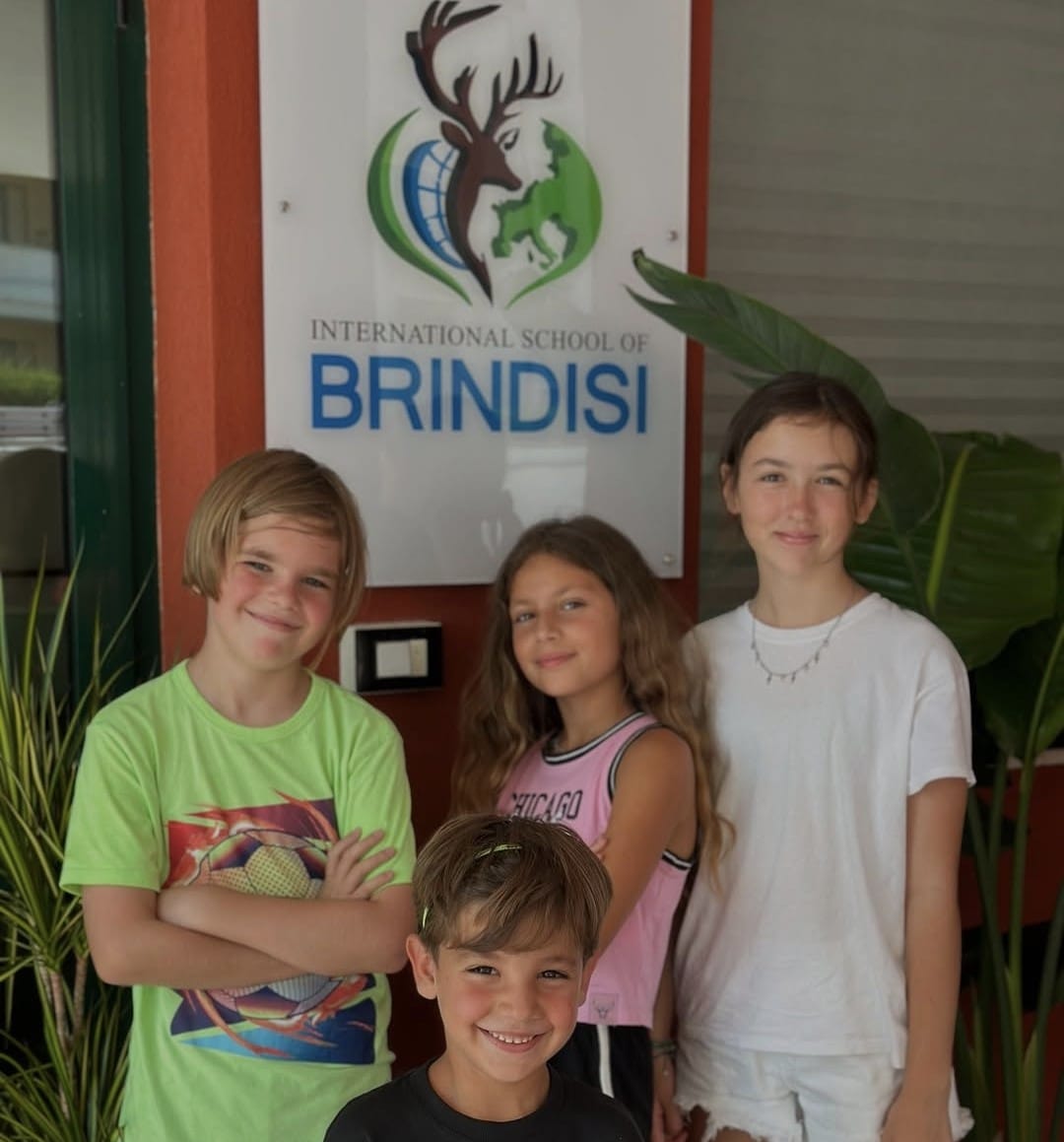



How one school is turning Puglia into Italy's new expat capital
BRINDISI, Italy - Rezul -- Tax haven. Mediterranean lifestyle. World-class education. Welcome to Brindisi.
Southern Italy has long had everything a relocating family could want: Mediterranean climate, UNESCO-recognised culture and cuisine, safety that has become rare in modern cities, and tax incentives that should make any financial advisor pay attention. Retirees relocating to the South pay a flat 7% on foreign income. Qualified professionals can exempt up to 70% of their earnings for five years. Property prices are a fraction of Northern Italy, let alone London, Singapore, or Monaco.
Yet for decades, one question silently killed countless relocation decisions: Where will my children go to school?
South of Naples, there was no internationally accredited school. No institution offering curriculum continuity for families moving from London, New York, Singapore, or Dubai. No pathway that allowed children to maintain their educational trajectory while their parents pursued the Mediterranean life.
This was the invisible infrastructure gap. Invisible because no public system could deliver what international families require: an American curriculum model with global transferability, the quality standards of private international schools, and the accreditation for seamless transitions worldwide. No government could fund it. Yet it determined, more than any airport or motorway, whether international professionals would actually make the move.
That gap has now been closed.
The Brindisi Model
The International School of Brindisi has become the first foreign school recognised by Italy's Ministry of Education in Puglia, and the only internationally accredited institution south of Naples. For the first time in history, international families can relocate to Southern Italy without sacrificing their children's educational future - or their continued global mobility.
Some are calling this the emergence of a new model for Mediterranean living - the Monaco of the South.
The comparison is deliberate. Monaco offers tax efficiency, security, and lifestyle. But it also offers high exclusivity and astronomical property prices. The Brindisi Model offers the tax advantages, the lifestyle, the climate - plus the Southern Italian soul: the chance to become part of a community that is growing, not one that is already complete.
More on Rezul News
"We are anchored in authenticity, community, and meaning. Discerning families increasingly want their lifestyle choices to reflect their values. Contributing to a community that's developing - that's the new luxury."
Brindisi is a city of 90,000 where a family becomes part of the story, not an anonymous addition to an expatriate enclave. A place where UNESCO-recognised culinary heritage is lived by residents, not performed for tourists. A community where the Southern Italian code of reciprocity - generosity, mutual support, humble service - means giving and receiving are traditions, not transactions.
The Brindisi Model is simple: world-class lifestyle, extraordinary value, authentic community - and now, finally, world-class education.
Why Brindisi, why now
Puglia's transformation from hidden gem to global destination is no longer anecdotal. The data tells the story:
Tourism up 10.6% year-over-year
+20.1% foreign arrivals to Brindisi province
10.7 million passengers through Puglia's airports in 2024
This is not a tourism spike. It is a structural shift. Puglia is becoming a Tier 1 Mediterranean destination. The question has always been whether the region could convert visitors into residents. The missing piece - international education - is now in place.
In August 2026, the XX Mediterranean Games will bring 5,000 athletes from 26 nations to compete across Taranto, Brindisi, and Lecce. An estimated 150,000 to 200,000 visitors will experience the region, many for the first time - not as tourists, but as witnesses to what Puglia is becoming. A EUR 275 million infrastructure investment has prepared the stage.
For many international families, this will be their first exposure to what Puglia can offer as a place to live. And for the first time, they will discover that the barrier they assumed existed has been removed.
How it Happened: from Manila to Puglia
Behind the Brindisi Model is an unlikely protagonist. Carmela D'Angelo spent two decades in the upper echelons of international finance before returning to her native Puglia - senior leadership at the Asian Development Bank in Manila, executive roles at ANZ Banking Group across Melbourne and Singapore, management positions at Royal Bank of Scotland during the complex post-merger years.
Now she serves as Chief Operating Officer of a K-12 school. She believes it might be the most important infrastructure project in Southern Italy.
More on Rezul News
"Everyone focuses on the visible infrastructure," D'Angelo explains. "Airports, motorways, restored historic centres. But there's an invisible infrastructure that determines whether professionals actually relocate: education. Without it, every other investment underperforms."
D'Angelo's journey reflects unconventional logic. Born in Italy, she pursued a PhD in Classics at the University of Bologna before pivoting to international business. Her career took her across three continents, managing budgets that would fund small nations, accumulating certifications and networks spanning global finance and development.
"I kept asking myself what Southern Italy actually needed to compete," she recalls. "We have the climate, the culture, the gastronomy - just recognised by UNESCO as the first national cuisine to receive Intangible Heritage status. We have tax incentives that should make treasurers weep with joy. But families weren't coming. The missing piece was always the same."
International resonance
The early results suggest D'Angelo's thesis is correct. Enrollment at ISB has grown 30% in the past year. Student families now represent more than ten nationalities - professionals who left London, the USA, and Singapore; entrepreneurs from Northern Europe; and Italian families returning from abroad. This last group, the ritorno generation, represents exactly the demographic that development economists have long hoped to attract back to the Mezzogiorno.
The school operates as a registered non-profit, creating opportunity for ESG-conscious donors and corporations to invest not in charity, but in regional transformation.
The implications extend beyond one school. If the Brindisi Model proves sustainable, it offers a template for how Southern European regions can compete for global talent - not by replicating Northern European urban density, but by leveraging authentic lifestyle advantages while closing specific infrastructure gaps.
"We have soul. And now we have a school. The rest is just execution."
Brindisi has been the Gateway to the East - Porta d'Oriente - for three thousand years. Now it may be becoming something else: the gateway for a new generation of global citizens seeking not just location, but meaning. Not just value, but values. Not just lifestyle, but legacy.
The invisible gap has been closed. What follows is up to those ready to walk through.
- ENDS -
Notes to Editors
The International School of Brindisi is the first foreign school recognised by Italy's Ministry of Education in Puglia and the only internationally accredited institution south of Naples. The school is open for enrolments all year round.
For more information http://.isbrindisi.com
Southern Italy has long had everything a relocating family could want: Mediterranean climate, UNESCO-recognised culture and cuisine, safety that has become rare in modern cities, and tax incentives that should make any financial advisor pay attention. Retirees relocating to the South pay a flat 7% on foreign income. Qualified professionals can exempt up to 70% of their earnings for five years. Property prices are a fraction of Northern Italy, let alone London, Singapore, or Monaco.
Yet for decades, one question silently killed countless relocation decisions: Where will my children go to school?
South of Naples, there was no internationally accredited school. No institution offering curriculum continuity for families moving from London, New York, Singapore, or Dubai. No pathway that allowed children to maintain their educational trajectory while their parents pursued the Mediterranean life.
This was the invisible infrastructure gap. Invisible because no public system could deliver what international families require: an American curriculum model with global transferability, the quality standards of private international schools, and the accreditation for seamless transitions worldwide. No government could fund it. Yet it determined, more than any airport or motorway, whether international professionals would actually make the move.
That gap has now been closed.
The Brindisi Model
The International School of Brindisi has become the first foreign school recognised by Italy's Ministry of Education in Puglia, and the only internationally accredited institution south of Naples. For the first time in history, international families can relocate to Southern Italy without sacrificing their children's educational future - or their continued global mobility.
Some are calling this the emergence of a new model for Mediterranean living - the Monaco of the South.
The comparison is deliberate. Monaco offers tax efficiency, security, and lifestyle. But it also offers high exclusivity and astronomical property prices. The Brindisi Model offers the tax advantages, the lifestyle, the climate - plus the Southern Italian soul: the chance to become part of a community that is growing, not one that is already complete.
More on Rezul News
- AI-Driven Drug Development with Publication of New Bioinformatics Whitepaper for BullFrog AI: $BFRG Strengthens Its Position in AI Drug Development
- IQSTEL Enters 2026 from a Position of Strength Following Transformational Year Marked by N A S D A Q Uplisting, Record Revenue and First-Ever
- Are You Hiring The Right Heater Repair Company in Philly?
- Will Affordability Return to Vegas? Trang Hooser Las Vegas Realtor Unveils 2026 Forecast
- Appliance EMT Expands Professional Appliance Repair Services to Hartford, Connecticut
"We are anchored in authenticity, community, and meaning. Discerning families increasingly want their lifestyle choices to reflect their values. Contributing to a community that's developing - that's the new luxury."
Brindisi is a city of 90,000 where a family becomes part of the story, not an anonymous addition to an expatriate enclave. A place where UNESCO-recognised culinary heritage is lived by residents, not performed for tourists. A community where the Southern Italian code of reciprocity - generosity, mutual support, humble service - means giving and receiving are traditions, not transactions.
The Brindisi Model is simple: world-class lifestyle, extraordinary value, authentic community - and now, finally, world-class education.
Why Brindisi, why now
Puglia's transformation from hidden gem to global destination is no longer anecdotal. The data tells the story:
Tourism up 10.6% year-over-year
+20.1% foreign arrivals to Brindisi province
10.7 million passengers through Puglia's airports in 2024
This is not a tourism spike. It is a structural shift. Puglia is becoming a Tier 1 Mediterranean destination. The question has always been whether the region could convert visitors into residents. The missing piece - international education - is now in place.
In August 2026, the XX Mediterranean Games will bring 5,000 athletes from 26 nations to compete across Taranto, Brindisi, and Lecce. An estimated 150,000 to 200,000 visitors will experience the region, many for the first time - not as tourists, but as witnesses to what Puglia is becoming. A EUR 275 million infrastructure investment has prepared the stage.
For many international families, this will be their first exposure to what Puglia can offer as a place to live. And for the first time, they will discover that the barrier they assumed existed has been removed.
How it Happened: from Manila to Puglia
Behind the Brindisi Model is an unlikely protagonist. Carmela D'Angelo spent two decades in the upper echelons of international finance before returning to her native Puglia - senior leadership at the Asian Development Bank in Manila, executive roles at ANZ Banking Group across Melbourne and Singapore, management positions at Royal Bank of Scotland during the complex post-merger years.
Now she serves as Chief Operating Officer of a K-12 school. She believes it might be the most important infrastructure project in Southern Italy.
More on Rezul News
- Java Holdings LLC Acquires +Peptide, Expanding Portfolio Across Coffee, Science, and Functional Nutrition
- Titan Pressure Washing Completes Tough Rust Mitigation and Acid Stain Removal Project in Hobe Sound, Florida
- OneSolution® Expands to Orlando with New Altamonte Springs Implant Center
- Indian Peaks Veterinary Hospital Launches Updated Dental Services Page for Boulder Pet Owners
- Dugan Air Donates $10,000 to Indian Creek Schools
"Everyone focuses on the visible infrastructure," D'Angelo explains. "Airports, motorways, restored historic centres. But there's an invisible infrastructure that determines whether professionals actually relocate: education. Without it, every other investment underperforms."
D'Angelo's journey reflects unconventional logic. Born in Italy, she pursued a PhD in Classics at the University of Bologna before pivoting to international business. Her career took her across three continents, managing budgets that would fund small nations, accumulating certifications and networks spanning global finance and development.
"I kept asking myself what Southern Italy actually needed to compete," she recalls. "We have the climate, the culture, the gastronomy - just recognised by UNESCO as the first national cuisine to receive Intangible Heritage status. We have tax incentives that should make treasurers weep with joy. But families weren't coming. The missing piece was always the same."
International resonance
The early results suggest D'Angelo's thesis is correct. Enrollment at ISB has grown 30% in the past year. Student families now represent more than ten nationalities - professionals who left London, the USA, and Singapore; entrepreneurs from Northern Europe; and Italian families returning from abroad. This last group, the ritorno generation, represents exactly the demographic that development economists have long hoped to attract back to the Mezzogiorno.
The school operates as a registered non-profit, creating opportunity for ESG-conscious donors and corporations to invest not in charity, but in regional transformation.
The implications extend beyond one school. If the Brindisi Model proves sustainable, it offers a template for how Southern European regions can compete for global talent - not by replicating Northern European urban density, but by leveraging authentic lifestyle advantages while closing specific infrastructure gaps.
"We have soul. And now we have a school. The rest is just execution."
Brindisi has been the Gateway to the East - Porta d'Oriente - for three thousand years. Now it may be becoming something else: the gateway for a new generation of global citizens seeking not just location, but meaning. Not just value, but values. Not just lifestyle, but legacy.
The invisible gap has been closed. What follows is up to those ready to walk through.
- ENDS -
Notes to Editors
The International School of Brindisi is the first foreign school recognised by Italy's Ministry of Education in Puglia and the only internationally accredited institution south of Naples. The school is open for enrolments all year round.
For more information http://.isbrindisi.com
Source: www.isbrindisi.com
0 Comments
Latest on Rezul News
- HBZBZL Unveils "Intelligent Ecosystem" Strategy: Integrating AI Analytics with Web3 Incubation
- Kaltra Launches Next-Gen MCHEdesign With Full Integration Into MCHEselect — Instant Simulation & Seamless Microchannel Coil Workflow
- A Well-Fed World, Youth Climate Save and PAN International Launch PHRESH: A Global Directory of Plant-Based Hunger Relief Organizations
- Comanche Christmas Parade Wraps the Town in Holiday Cheer
- Guests Can Save 25 Percent Off Last Minute Bookings at KeysCaribbean's Village at Hawks Cay Villas
- Trump's Executive Order Rescheduling Cannabis: Accelerating M&A in a Multibillion-Dollar Industry
- Genuine Hospitality, LLC Selected to Operate Hilton Garden Inn Birmingham SE / Liberty Park
- American Net Lease Facilitates Sale of Dollar General in Conroe, Texas
- American Net Lease Facilitates Acquisition of Bojangles in Hartsville, SC
- Documentary "Prescription for Violence: Psychiatry's Deadly Side Effects" Premieres, Exposes Link Between Psychiatric Drugs and Acts of Mass Violence
- A Symphony of Support: Trang & David Hooser Champion Arts Education for Autistic Youth at NSA's Annual Gala
- Price Improvement on Luxurious Lāna'i Townhome with Stunning Ocean Views
- Comanche Methodist Church Serves 500 Meals, Strengthening Community Connections
- Nextvisit Co-Founder Ryan Yannelli Identifies Six Critical Factors for Behavioral Health Providers Evaluating AI Scribes in 2026
- Healthcare Executive Derek Streich Launches Professional Website with Derek Streich Video Biography
- CredHub and Real Property Management Join Forces to Empower Franchise Owners with Rental Payment Credit Reporting Solutions
- Leimert Park Announces Weeklong Kwanzaa Festival & Kwanzaa Parade Celebrating Black History, Culture, and Community
- Clear Insurance Calls for Winter Readiness After ONS Figures
- Intercontinental RE Corporation and ScanlanKemperBard Acquire 86k-SF Retail Center in Portland, OR
- Renowned Alternative Medicine Specialist Dr. Sebi and His African Bio Mineral Balance Therapy Are the Focus of New Book