
Popular on Rezul
- Houston Market Report Q3 2026 | Industrial Distribution - 201
- Instant DSCR Term Sheet Now Available in ChatGPT for Real Estate Investors - 199
- Wappler Capital Expands Investment Platform Into Georgia - 196
- ResC4EU Final Event at KOMPOZYT-EXPO 2026 – Building Resilient European Supply Chains - 194
- CompStak Launches Agent Connect, an MCP Server for Verified Commercial Real Estate Data - 167
- Pulte announces Canopy Cove, Pulte's first-ever townhome community in St. Johns County - 164
- Ad Leverage Sponsors ServiceTitan Pantheon 2026, Supporting Education and Growth in the Home Services Industry - 154
- Cays Realty Launches AI-Powered South Florida Property Search Platform - 154
- The Enclave at Winslow Fulfills an Important Role in South Jersey's Housing Market - 153
- NYC Banners Delivers High-Stakes UN General Assembly Backdrop for the US Department of State Event - 137
Renkeer Water Quality Sensors Support Efficient Operation of AI Liquid Cooling Systems
Rezul News/10748346
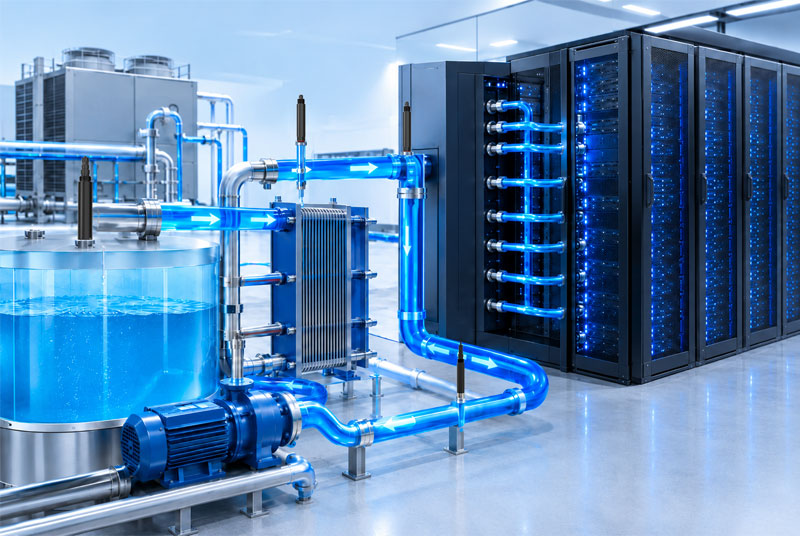
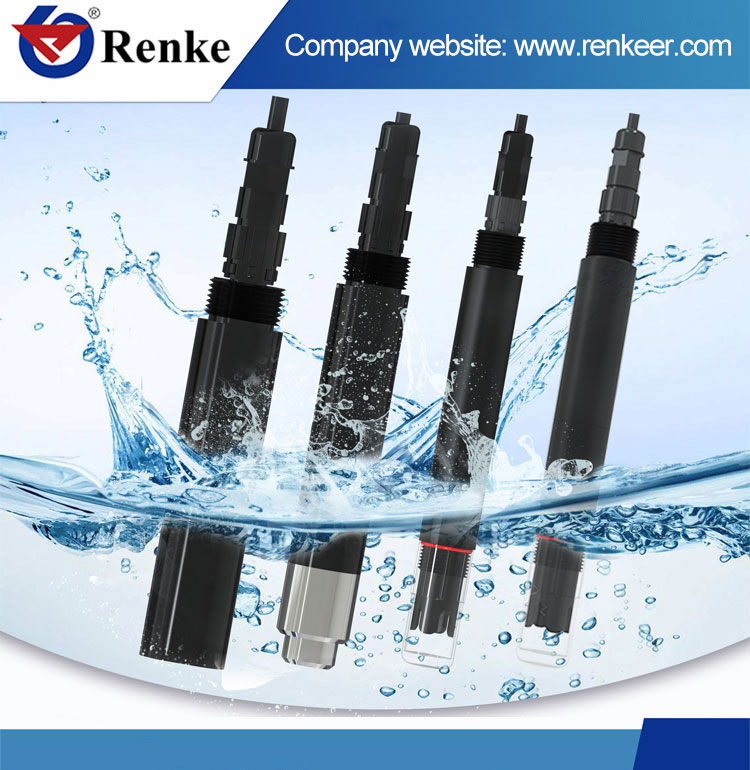

Renkeer water quality sensors deliver continuous monitoring of key coolant parameters in AI data centers, assisting operators in identifying fluid abnormalities and maintaining system efficiency.
JINAN, China - Rezul -- As artificial intelligence workloads increase thermal demands on data centers, liquid cooling is becoming an important approach to managing heat generated by high-performance computing equipment. Renkeer, a provider of water quality monitoring solutions, supports this trend by supplying water quality sensors that help maintain the efficient operation of AI liquid cooling systems.
Coolant loops in AI data centers typically include narrow microchannel cold plates, pumps, manifolds, fittings and heat exchangers made from several different metals. Even small shifts in water quality can cause problems in this environment. Rising conductivity may signal ion contamination or coolant degradation, which increases corrosion and leakage risk. A drifting pH value can accelerate metal attack or point to depleted inhibitors. Dissolved oxygen promotes corrosion in copper and steel parts. Suspended particles can clog microchannels and reduce flow. Because a single cooling failure can idle expensive GPU clusters, continuous measurement is more dependable than periodic manual sampling.
More on Rezul News
Renkeer's water quality range includes pH sensors, conductivity sensors, dissolved oxygen sensors, turbidity sensors and ORP sensors. Together they measure acidity, ionic content, oxygen level, particle load and oxidation-reduction potential, the main indicators used to judge the condition of process water and coolant. The sensors are built for continuous online use and can be connected to industrial controllers and IoT monitoring platforms.
Continuous readings allow operators to set alarm thresholds, follow trends over time and schedule maintenance such as filter changes, coolant top-ups and system flushes based on actual condition instead of fixed intervals. This reduces manual sampling work, shortens response time when water quality drifts and supports longer service life for pumps, heat exchangers and cold plates. Data from several loops, including primary loops, secondary loops and associated chillers and cooling towers, can be gathered on one monitoring platform, giving facility teams a clear view of the whole cooling system.
More on Rezul News
When deploying water quality monitoring equipment in liquid cooling systems, sensor selection is crucial. Direct chip cooling, immersion cooling, and traditional water cooling loops use different cooling media and have varying material compatibility standards. Operators must verify the sensor contact materials, measurement range, and calibration performance for the target cooling medium and interpret sensor measurements in conjunction with equipment specifications, maintenance records, and other relevant operational data.
Through its water quality monitoring solutions, Renkeer aims to support data-driven management of water-based cooling applications. As data center operators expand infrastructure to meet growing AI computing demands, reliable measurement of relevant coolant parameters can contribute to more informed maintenance decisions, improved visibility into operating conditions, and effective cooling system management.
Coolant loops in AI data centers typically include narrow microchannel cold plates, pumps, manifolds, fittings and heat exchangers made from several different metals. Even small shifts in water quality can cause problems in this environment. Rising conductivity may signal ion contamination or coolant degradation, which increases corrosion and leakage risk. A drifting pH value can accelerate metal attack or point to depleted inhibitors. Dissolved oxygen promotes corrosion in copper and steel parts. Suspended particles can clog microchannels and reduce flow. Because a single cooling failure can idle expensive GPU clusters, continuous measurement is more dependable than periodic manual sampling.
More on Rezul News
- Parade of Homes Winners Announced
- ClearSight Therapeutics Receives U.S. Patent Notice of Allowance
- Hudson Valley Interior Designer Jennifer Tampasis Expands "Design Blueprint" to East Coast Homeowners
- Phoenix REALTOR® Jennifer Alvarez Highlights Real Estate Challenges When Co-Owners Disagree About Selling
- Revinate launches hospitality's first data activation platform
Renkeer's water quality range includes pH sensors, conductivity sensors, dissolved oxygen sensors, turbidity sensors and ORP sensors. Together they measure acidity, ionic content, oxygen level, particle load and oxidation-reduction potential, the main indicators used to judge the condition of process water and coolant. The sensors are built for continuous online use and can be connected to industrial controllers and IoT monitoring platforms.
Continuous readings allow operators to set alarm thresholds, follow trends over time and schedule maintenance such as filter changes, coolant top-ups and system flushes based on actual condition instead of fixed intervals. This reduces manual sampling work, shortens response time when water quality drifts and supports longer service life for pumps, heat exchangers and cold plates. Data from several loops, including primary loops, secondary loops and associated chillers and cooling towers, can be gathered on one monitoring platform, giving facility teams a clear view of the whole cooling system.
More on Rezul News
- Discard Junk Removal Publishes Guide Confirming It Is Not American Discard Junk Removal
- Berkshire Hathaway HomeServices FNR announces The Neighborhood of San Jose
- HLN Consulting Names Lilly Kan as Its First Chief Executive Officer
- BitTitan Accelerates Large-Scale Document Migrations with MigrationWiz
- Clearnetworx Deploys netElastic vBNG, CGNAT And netVision To Power Fiber Expansion Across Colorado's Western Slope
When deploying water quality monitoring equipment in liquid cooling systems, sensor selection is crucial. Direct chip cooling, immersion cooling, and traditional water cooling loops use different cooling media and have varying material compatibility standards. Operators must verify the sensor contact materials, measurement range, and calibration performance for the target cooling medium and interpret sensor measurements in conjunction with equipment specifications, maintenance records, and other relevant operational data.
Through its water quality monitoring solutions, Renkeer aims to support data-driven management of water-based cooling applications. As data center operators expand infrastructure to meet growing AI computing demands, reliable measurement of relevant coolant parameters can contribute to more informed maintenance decisions, improved visibility into operating conditions, and effective cooling system management.
Source: Shandong Renke Control Technology Co., Ltd.
0 Comments
Latest on Rezul News
- Citizens for West Virginia Election Integrity Urges "FOR" on Amendment 1
- Vegan Kingz Expands Direct-Import Wholesale Lineup to Help Commercial Kitchens Cut Ingredient Costs
- Dan Ventures Launches Rent-Ready to Bring Verified, Lender-Ready Rentals to Overlooked Neighborhoods
- Everything Policy Unveils Their Classroom Resources Behind Every Policy Topic
- Acuvance Survey Finds ERP Integration Remains a Key Challenge as Healthcare Organizations Prepare for AI
- Constantine "Costa" Kapothanasis II Acquires The Lubri-Loy Company, Carrying a 77-Year-Old American Lubricant Brand Into Its Next Era
- LS2 Partners with Angels Of Dirt's "Next Chapter Racer" Series Celebrating Women and Girls in Motorsports
- Danish company biosuite introduces biotech procurement software to track outsourced R&D commitments
- South Jersey Realtor Christine Boysen Guides Buyers and Sellers Through Life's Next Chapters
- Industrial & systems engineering educator and professional to lead global strategic partnerships for professional society
- Dan Ventures Shares Plans for Common Frame, Attainable and Workforce Housing for Vermont and Florida
- Chris Grabinski Joins Stockdale Capital Partners to Bolster Healthcare Investment Platform
- Convergence of AI, Wearable Technology, Remote Patient Monitoring and Real-World Healthcare: PomDoctor Ltd. (N A S D A Q: POM)
- 4th Qtr. 2026 Treasure Coast of Florida, Real Estate Trends
- Maple Ridge Landscaping Celebrates 50+ Years Serving Boone, NC and the High Country
- Historic Mansion Enters Market With Ties to Kansas City's First Skyscraper
- Denver Rent Report, October 2026: Median 1-Bedroom About $1,980, 7 in 10 Communities Offer Specials
- Service Guys Urges Ontario Homeowners to Book Chimney Cleaning and WETT Inspections Before the 2026 Heating Season
- WOWX Completes Its Transition from CEX to Decentralized Derivatives Infrastructure
- HSS Medical Supply Celebrates One-Year Anniversary of Its Top Performing Sales Team