
Popular on Rezul
- Sylvester Anthony III Introduces His Artist Journey with Debut Single "Cherish"
- ReviewsAlly Launches Evidence-Based Review Platform for VPNs, Business Software, and Online Services
- This Weekend Causeway Cove Country BBQ & Music Festival Returns for Fourth Year, Celebrating America's 250th Anniversary on the Water
- Joulescope JS320 Launches to Help Engineers Develop Battery-Powered Devices with Greater Confidence
- Millennial Maven Creative Foundation Assists In Bringing Juneteenth to the FIFA World Cup Fan Festival with an Authentically Dallas Lineup
- Alvear Homes Expands 2026 Buyer Education Initiative to Help North Carolina Homebuyers
- Webtronix Designs Web Agency Launches "LocalFind" to Revolutionize AI Local SEO for Local Businesses
- Locksmith Amsterdam Launches 24/7 Emergency Lockout and Lock Repair Service Across All Amsterdam Districts
- Titan Pressure Washing Shows The Power Of Complete Exterior Cleaning On A Roof And Concrete Project
- Shield Property Group Launches Full-Service Property Management Company Serving Southeast Michigan
Similar on Rezul
- Missouri Hemp Businesses File Federal Lawsuit Challenging HB 2641
- ENTOUCH Named Top 100 Inspiring Workplaces in North America for Third Consecutive Year
- J&J Exterminating Mourns the Passing of Founder Bobby John Sr
- New "Lakeside Picnic Ride" Package in Japan's Lake Chuzenji region of Nikko: July 1- November 30, 2026
- IGH Naturals Announces Peer-Reviewed HuMOLYTE® Study Published in Frontiers in Nutrition
- Verbica Challenges Panetta to a Televised Debate on the Issues
- Mister Omaha Tries The Turf At Lone Star Park
- City of San José Could Lose Access to Millions Under New CalEnviroScreen Tool 5.0
- Warm, Dry Summer Forecast Points to a Stronger Wasp and Yellowjacket Season Across the Pacific Northwest
- Inframark–Slater Joint Venture Selected to Manage Fulton County Wastewater Operations
New Study Highlights Increasing Demand for Growing Media and Assesses Raw Material Availability up to 2050
Rezul News/10737108
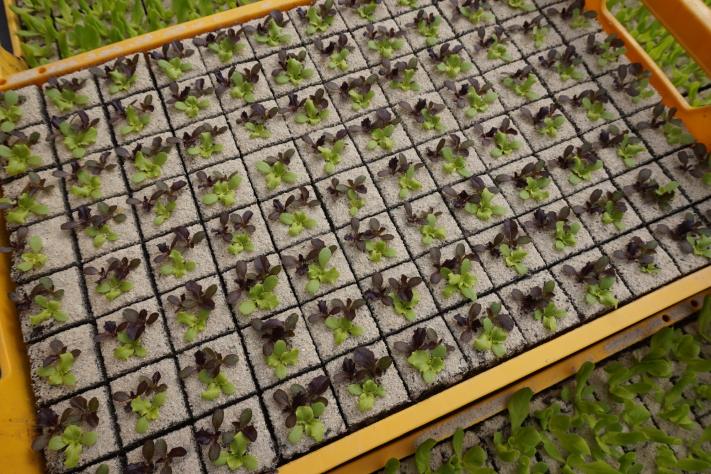
Growing media demand could quadruple by 2050 - Sufficient supply of materials not guaranteed
JYVASKYLA, Finland & WAGENINGEN, Netherlands - Rezul -- A recent study by Nguyen et al. from Wageningen University and Research and the Flanders Research Institute for Agriculture, Fisheries and Food examined two key questions: how demand for growing media may develop geographically by 2050, and whether sufficient raw materials are likely to be available to meet that demand.
Growing media (also known as potting soil or substrates) are essential for modern horticulture, supporting the cultivation of food crops, tree seedlings, ornamentals and mushrooms on an industrial scale. They contribute to an efficient use of water and nutrients and therefore play an important role in soilless cultivation systems worldwide, providing food and well-being to millions of people.
The study, "The growth of growing media market by 2050: demand and availability of raw materials", published in Frontiers in Horticulture on 26 May, updates the earlier global analysis by Chris Blok et al., Growing media for food and quality of life in the period 2020-2050 from 2021. It incorporates recent market data, additional known trends, improved regional and market segmentation, and newer estimates of constituent availability.
Growing media demand could quadruple by 2050
The results indicate that global demand for growing media could increase by approximately 250–290% by 2050, confirming the scale of growth from the previous study. Particularly strong growth is projected in the ornamental and tree nursery sectors, with the largest increases expected in China (430–570%) and in emerging markets across Asia, South America, and Africa.
More on Rezul News
Using 2022 data as a baseline, the researchers analysed five market segments: food crops, ornamentals, tree nurseries, mushroom casing for button mushrooms and the hobby market. On the constituent side, the assessment considered eight major raw materials: peat, coir, wood fibre, bark, compost, mineral wool, perlite, and aggregate materials.
Sufficient supply of materials not guaranteed
Researchers assessed the potential availability of raw materials under different scenarios. While sufficient constituent materials are available to meet projected demand under the highest availability assumptions, the study also identifies a potential gap under more constrained conditions.
Under a low-availability scenario, approximately 17 million cubic metres of additional constituents would be required by 2050. Identifying suitable new materials therefore remains a key challenge for the sector. These projections rely on the assumption that the supply industry and growing media infrastructure can scale up sufficiently to process all available raw materials.
Usage of peat to decrease by percentage but stay at current volumes
According to the study, global peat extraction for horticultural use amounts to approximately 59 million cubic metres per year. By 2050, peat use in growing media is projected to remain within a similar range of 53–63 million cubic metres.
However, as demand for growing media increases and the use of other constituent materials expands, peat's share of the overall growing media market is projected to decrease from around 50% today to approximately 18–19% by 2050. While potential demand for peat could be substantially higher, projected peat use remains constrained by the applied availability assumptions.
More on Rezul News
Future requirements
The authors emphasise that the study should be viewed as a framework for ongoing assessment rather than as a fixed forecast. Future developments will depend on many factors, including market trends, technological advances, processing capabilities, economic conditions and the successful scaling-up of raw material production. The findings also underline the need for continued research into material sourcing, processing technologies and efficient resource use to support future innovations.
The research was commissioned by the International Peatland Society (IPS) as part of its efforts to improve understanding of developments in the growing media sector and their implications for the responsible management and use of peatlands and peat. Future developments in the sector are relevant to many aspects of peatland management, including site selection, impact mitigation, peat use, post-extraction land use and rewetting.
Full paper
Nguyen VTH, Blok C, Barbagli T, Zheng Z, Mondaca-Duarte F and Vandecasteele B (2026) The growth of growing media market by 2050: demand and availability of raw materials. Front. Hortic. 5:1800056. https://doi.org/10.3389/fhort.2026.1800056
About the IPS
The International Peatland Society (IPS) is the leading international organisation dedicated to the responsible management and wise use of peatlands and peat. Founded in 1968, IPS brings together more than 1,000 members from 37 countries, including researchers, practitioners, companies, government organisations and other stakeholders.
Through its publications, projects and events, the Society promotes the exchange of knowledge and experience on peatland-related issues, including climate change, biodiversity, responsible use and restoration. Learn more: www.peatlands.org
Growing media (also known as potting soil or substrates) are essential for modern horticulture, supporting the cultivation of food crops, tree seedlings, ornamentals and mushrooms on an industrial scale. They contribute to an efficient use of water and nutrients and therefore play an important role in soilless cultivation systems worldwide, providing food and well-being to millions of people.
The study, "The growth of growing media market by 2050: demand and availability of raw materials", published in Frontiers in Horticulture on 26 May, updates the earlier global analysis by Chris Blok et al., Growing media for food and quality of life in the period 2020-2050 from 2021. It incorporates recent market data, additional known trends, improved regional and market segmentation, and newer estimates of constituent availability.
Growing media demand could quadruple by 2050
The results indicate that global demand for growing media could increase by approximately 250–290% by 2050, confirming the scale of growth from the previous study. Particularly strong growth is projected in the ornamental and tree nursery sectors, with the largest increases expected in China (430–570%) and in emerging markets across Asia, South America, and Africa.
More on Rezul News
- Premier Workspaces Renews and Expands Its Sherman Oaks Location at Valley Executive Tower
- Missouri Hemp Businesses File Federal Lawsuit Challenging HB 2641
- Boston Industrial Solutions Launches New Citrine® SA1-370 Silicone Glue for Permanent Adhesion
- Northeast Airlines Launches New Asset Management Group
- 303 Crown Maids Enhances Standard Cleaning Service for Consistent Home Upkeep
Using 2022 data as a baseline, the researchers analysed five market segments: food crops, ornamentals, tree nurseries, mushroom casing for button mushrooms and the hobby market. On the constituent side, the assessment considered eight major raw materials: peat, coir, wood fibre, bark, compost, mineral wool, perlite, and aggregate materials.
Sufficient supply of materials not guaranteed
Researchers assessed the potential availability of raw materials under different scenarios. While sufficient constituent materials are available to meet projected demand under the highest availability assumptions, the study also identifies a potential gap under more constrained conditions.
Under a low-availability scenario, approximately 17 million cubic metres of additional constituents would be required by 2050. Identifying suitable new materials therefore remains a key challenge for the sector. These projections rely on the assumption that the supply industry and growing media infrastructure can scale up sufficiently to process all available raw materials.
Usage of peat to decrease by percentage but stay at current volumes
According to the study, global peat extraction for horticultural use amounts to approximately 59 million cubic metres per year. By 2050, peat use in growing media is projected to remain within a similar range of 53–63 million cubic metres.
However, as demand for growing media increases and the use of other constituent materials expands, peat's share of the overall growing media market is projected to decrease from around 50% today to approximately 18–19% by 2050. While potential demand for peat could be substantially higher, projected peat use remains constrained by the applied availability assumptions.
More on Rezul News
- AI Visibility Labs LLC - Dallas Texas - July 16 2026
- NextBoat's AI-Powered Marine Marketplace Gains Momentum as Record Growth Signals an Inflection Point for Investors (N Y S E American: NXB)
- Stepping Off the Grid: Savista Retreat Announces New Experiential Packages in Jaipur for Travellers
- Where Is Your Faith The Movie and Sountrack
- Bynn Intelligence Ranks #1 in NIST Child Online Safety Evaluation for Ages 13–16
Future requirements
The authors emphasise that the study should be viewed as a framework for ongoing assessment rather than as a fixed forecast. Future developments will depend on many factors, including market trends, technological advances, processing capabilities, economic conditions and the successful scaling-up of raw material production. The findings also underline the need for continued research into material sourcing, processing technologies and efficient resource use to support future innovations.
The research was commissioned by the International Peatland Society (IPS) as part of its efforts to improve understanding of developments in the growing media sector and their implications for the responsible management and use of peatlands and peat. Future developments in the sector are relevant to many aspects of peatland management, including site selection, impact mitigation, peat use, post-extraction land use and rewetting.
Full paper
Nguyen VTH, Blok C, Barbagli T, Zheng Z, Mondaca-Duarte F and Vandecasteele B (2026) The growth of growing media market by 2050: demand and availability of raw materials. Front. Hortic. 5:1800056. https://doi.org/10.3389/fhort.2026.1800056
About the IPS
The International Peatland Society (IPS) is the leading international organisation dedicated to the responsible management and wise use of peatlands and peat. Founded in 1968, IPS brings together more than 1,000 members from 37 countries, including researchers, practitioners, companies, government organisations and other stakeholders.
Through its publications, projects and events, the Society promotes the exchange of knowledge and experience on peatland-related issues, including climate change, biodiversity, responsible use and restoration. Learn more: www.peatlands.org
Source: International Peatland Society (IPS)
0 Comments
Latest on Rezul News
- New Thriller 'Counterframe' Explores the Hidden Vulnerabilities of Modern Society
- Houston Industrial Distribution | Market Report Q2 2026
- Award-Winning Heritage at South Brunswick Continues to Thrive as One of New Jersey's Premier New Home Communities
- Estate Administration Services is Saving Las Vegas Neighborhoods from Neglect
- Four Seasons Cleaners Debuts Santa Barbara County's First 24/7 Dry Cleaning Kiosk New self-service
- WhereTu Launches to Help Americans Build Successful Lives Abroad
- Appliance EMT Expands Built-In and Walk-In Refrigerator Service in Metro Atlanta
- LawProactive Launches SB 37-Compliant Attorney Marketing Software With Exclusive City Territories Across California
- 303 Crown Maids Launches Enhanced Move-In / Move-Out Cleaning Service Page
- Cogs and Marvel expands EMEA leadership team for next phase of growth
- Beat the Philly Heat: Mid-July AC Boost
- Ostara Systems announce new CAFM software client: Papas Group
- Dave Freer's "Storm-Dragon" Wins First-Ever Prometheus Special Award For Young Adult Fiction
- T. Jones Group Celebrates Two Wins and Multiple Project Nominations at the 2026 HAVAN Awards
- Why Experience Matters When Selling a Home During Life's Biggest Transitions
- Studica Robotics Supports Robotics Training Camp for WorldSkills Shanghai 2026
- Lineus Medical Renews Agreement with Vizient, Delivering Enhanced Value for Vizient Members
- Vero Beach, Florida 2026 Summer Real Estate Trends
- CleanCondo Launches 24-Hour Building Intelligence Reports for Florida Condo Buyers
- Qscription Technologies Appoints Radiology Industry Veteran Elliot Silverman to Advisory Board