
Popular on Rezul
- Cre8ive Realty Highlights Waterfront Property Expertise Across Southwest Florida - 131
- Houston Market Report Q3 2026 | Industrial Distribution - 128
- ResC4EU Final Event at KOMPOZYT-EXPO 2026 – Building Resilient European Supply Chains - 123
- Wappler Capital Expands Investment Platform Into Georgia - 120
- CompStak Launches Agent Connect, an MCP Server for Verified Commercial Real Estate Data - 116
- Instant DSCR Term Sheet Now Available in ChatGPT for Real Estate Investors - 114
- Ad Leverage Sponsors ServiceTitan Pantheon 2026, Supporting Education and Growth in the Home Services Industry - 112
- The Drywall Helper Introduces a Versatile Approach to Measuring and Supporting Drywall - 111
- Pulte announces Canopy Cove, Pulte's first-ever townhome community in St. Johns County - 107
- The Enclave at Winslow Fulfills an Important Role in South Jersey's Housing Market - 106
Similar on Rezul
- Geospatial Innovation Comes to Sacramento: FOSS4G NA 2026
- Tulsa Air & Space Museum Launches "Give $16 for the F-16" Challenge to Bring Thunderbird Home for Veterans Day
- Freight Broker 911 CEO and President Milton Collier Is Rebuilding the Path Into Freight Brokerage
- SecureMaine 2026 is Here -- Thursday October 8th!
- ResC4EU Final Event at KOMPOZYT-EXPO 2026 – Building Resilient European Supply Chains
- American Garden Rose Selections™ Announces 2027 Winners
- Crossroads4Hope Launches Blood Cancer Resource Hub
- NIL Club Data Shows Brands Are Looking Beyond Follower Counts in College Sports
- Infinity Infusion Solutions Launches "Women Leading Infusion Care" Campaign for National Women in Business Month
- Badanamu Partners With Moonbug Entertainment In Landmark Distribution Deal
American Wild Horses Set On Path To Extinction?
Rezul News/10437501
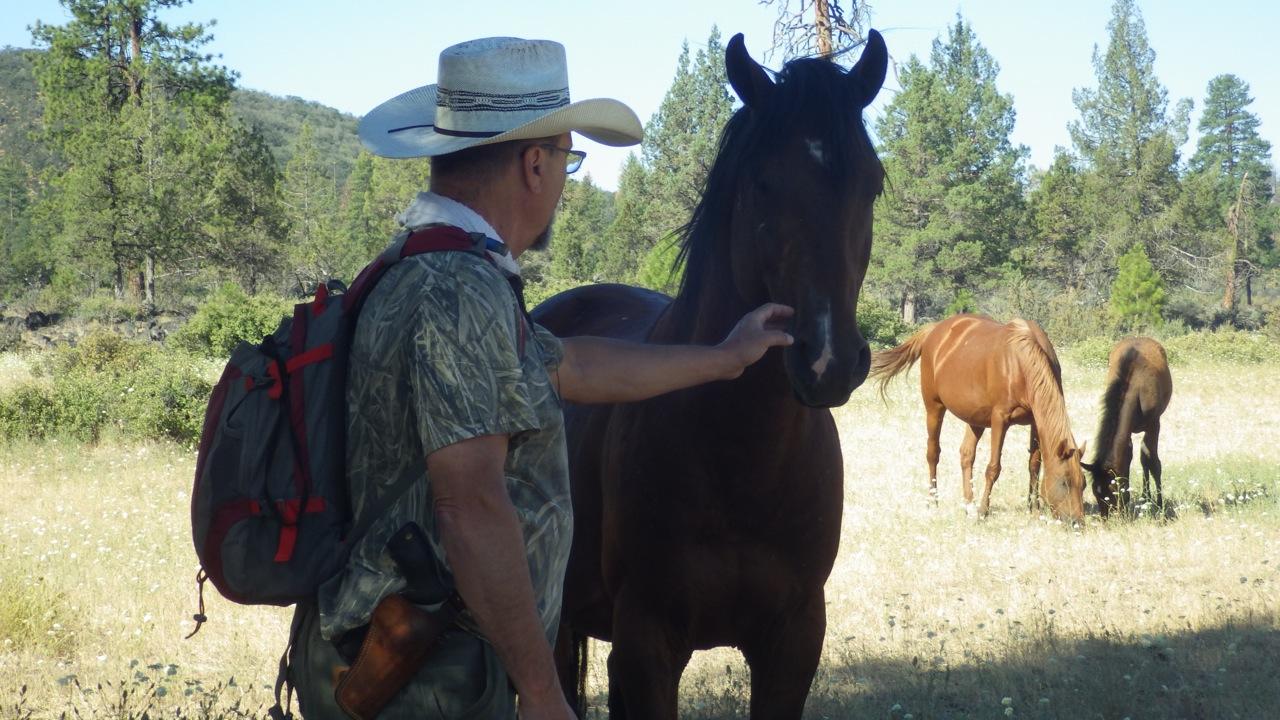
YREKA, Calif. - Rezul -- In a certified letter delivered to Return To Freedom, Inc. ('RTF') and it's board of directors on September 16, 2019, key wild horse and burro advocates demanded that Return To Freedom, a 501-C-3 non-profit, immediately withdraw its support of the so-called proposal titled; 'The Path Forward For Management Of BLM's Wild Horses & Burros' ('Proposal') [1].
On August 28th 2019, naturalist William E. Simpson II had a phone call with the Executive Director of the Public Lands Council, Mr. Ethan Lane. In that telephone call, Mr. Lane alluded to Mr. Simpson that via RTF's support of the Proposal, he arguably had the needed majority of all wild horse and burro advocates to support the Proposal's acceptance by Congress. This is tantamount to an admission that, without the support of Return To Freedom, the livestock industry's surrogates (BLM, HSUS, ASPCA, AMF, etc.) would have to go back to the drawing board.
A majority of wild horse advocates and organizations, including Friends of Animals ('FOA') feel that the current Proposal as written is seriously flawed and would likely lead to the final extinction of native species American wild horses and burros in America. This Proposal is particularly troubling given there is a superior alternative plan for managing wild horses and burros called 'Wild Horse Fire Brigade', which offers savings to taxpayers using an ecologically sound method for rewilding BLM and USFS wild horses and burros [2].
There is more than enough existing and new science, as well as decades of empirical experience, that argues compellingly against the flawed precepts upon which the Proposal RTF supports is built.
The current Proposal posits are premised upon known misinformation, including those found in four key precepts of the Proposal, each followed by a brief counterpoint made by experts who oppose the current Proposal:
Proposal: Conduct targeted gathers and removals at densely populated Herd Management Areas (HMAs) to reduce herd size and make progress towards AML."
Counterpoint: This has been done unsuccessfully for decades and is by all accounts a draconian methodology only made necessary due to the large-scale decimation of the evolutionary predators of wild horses and burros, namely, mountain lions, bears, wolves and coyotes.
More on Rezul News
Proposal: Treat gathered horses and burros with population growth suppression tools prior to being returned to the range. Reversible methods must be administered to an appropriate percentage of mares (generally close to 90%) to control populations, with some flexibility depending on modeling of range and herd parameters."
Counterpoint: The latest science proves that the use of chemical contraceptives in equids leads to the breakdown of critical social structures in family bands of wild horses as well as resulting in varied degrees of sterilization and erosion of genetic viability.
Proposal: Relocate horses and burros in holding facilities, and those taken off the range, to large cost-effective humane pasture facilities funded through public-private partnerships."
Counterpoint: Here again, this has been an ongoing expensive failure that will continue to burden taxpayers.
Proposal: Promote adoptions in order to help reduce captive populations and costs. The BLM is currently spending $2,250 ($3,250 with incentive) per adopted horse to promote adoptions that ultimately provide considerable cost savings to the agency. Investing in the adoption process for each horse will reduce or eliminate the estimated $46,000 per horse expenditure in off range holding over the course of their lifetime."
Counterpoint: Another paradigm that has proven relatively ineffective as evidenced by tens of thousands of wild horses and burros that nevertheless end up in off-range facilities at great ongoing cost to taxpayers. Even though a small percentage of native species American wild horses can be successfully gentled and thereby 'domesticated,' management of wildlife in this manner is costly and very limited in its scope and effect as any genuine solution.
Leading independent wild burro and horse advocates are of the opinion that if RTF rescinds support of the existing Proposal, it could then be amended to include what are arguably the minimal components to assure a future representation of free-roaming native species American wild horses and burros in carefully selected remote wilderness areas in America where the presence of a proper proportion of the evolved apex predators of equids will certainly control equid populations [3].
More on Rezul News
The 3 minimal components are:
1) Current management practices amount to an egregious misuse of the WHBA. Not only must helicopter roundups come to an immediate end, BLM and the USFS must provide greater protections to wild equids in existing HMAs by reevaluating HMA boundaries and AMLs, giving priority to wild equids over any human use of these public lands. These agencies also currently ignore any benefit wild equids have on the lands they currently occupy, including the potential to lower the risk of wildfire in the grasslands occupied by wild equids. Congress must ensure that wild equids and their benefits are given more weight in establishing HMA boundaries and AMLs.
2) All wild equids that are rounded up after considerations in no. 1 will be transported, families intact, unmolested (no treatments with any chemicals or castration of stallions) into carefully selected and appropriately remote wilderness areas. Where possible, such equids can also be used to establish larger AMLs on existing HMAs (or expanded HMAs) where such populations would benefit the grassland habitats.
3) A percentage (TBD) of 10-year old (and younger) wild horses and burros held in off range captivity will be rewilded into carefully selected and appropriately remote wilderness areas.
The following *advocates were signatories on the letter to RTF.
*Friends of Animals (https://www.friendsofanimals.org/about-us/)
*Board of Directors Coyote Canyon Caballos d'Anza Inc 501 c 3 - Kathleen Hayden, Secretary
*Carla Bowers
*Lorna Moffat
* Darice Massey
* Dr. Sharon Greenleaf La Pierre - Red Raven Farms - Colorado & Kentucky
*Speak Up For Horses
*Jeff Hudson
*William E. Simpson II – Naturalist / Rancher
[1] https://www.energy.senate.gov/public/index.cfm/files/serve?File_id=0869B02B-E9C5-4F0B-9AE8-9A8A1C85293E
[2] www.WHFB.us
[3] Impact Of Wild Horses On Wilderness Landscape And Wildfire - Preliminary Findings Report - By: William E. Simpson II -Naturalist - July 25, 2019 (https://docs.wixstatic.com/ugd/6a30c6_98642a78546849f0a94e2687cdf35654.pdf)
On August 28th 2019, naturalist William E. Simpson II had a phone call with the Executive Director of the Public Lands Council, Mr. Ethan Lane. In that telephone call, Mr. Lane alluded to Mr. Simpson that via RTF's support of the Proposal, he arguably had the needed majority of all wild horse and burro advocates to support the Proposal's acceptance by Congress. This is tantamount to an admission that, without the support of Return To Freedom, the livestock industry's surrogates (BLM, HSUS, ASPCA, AMF, etc.) would have to go back to the drawing board.
A majority of wild horse advocates and organizations, including Friends of Animals ('FOA') feel that the current Proposal as written is seriously flawed and would likely lead to the final extinction of native species American wild horses and burros in America. This Proposal is particularly troubling given there is a superior alternative plan for managing wild horses and burros called 'Wild Horse Fire Brigade', which offers savings to taxpayers using an ecologically sound method for rewilding BLM and USFS wild horses and burros [2].
There is more than enough existing and new science, as well as decades of empirical experience, that argues compellingly against the flawed precepts upon which the Proposal RTF supports is built.
The current Proposal posits are premised upon known misinformation, including those found in four key precepts of the Proposal, each followed by a brief counterpoint made by experts who oppose the current Proposal:
Proposal: Conduct targeted gathers and removals at densely populated Herd Management Areas (HMAs) to reduce herd size and make progress towards AML."
Counterpoint: This has been done unsuccessfully for decades and is by all accounts a draconian methodology only made necessary due to the large-scale decimation of the evolutionary predators of wild horses and burros, namely, mountain lions, bears, wolves and coyotes.
More on Rezul News
- Geospatial Innovation Comes to Sacramento: FOSS4G NA 2026
- Tulsa Air & Space Museum Launches "Give $16 for the F-16" Challenge to Bring Thunderbird Home for Veterans Day
- Hannk And Zubie Join Forces To Shape The Next Generation Of Connected Vehicle Telematics
- Zhengxin Chicken Steak Opens at South Hills Plaza in West Covina
- Coinfiliate Launches Platform to Helps Shoppers Earn Cashback and Creators Earn Referral Rewards
Proposal: Treat gathered horses and burros with population growth suppression tools prior to being returned to the range. Reversible methods must be administered to an appropriate percentage of mares (generally close to 90%) to control populations, with some flexibility depending on modeling of range and herd parameters."
Counterpoint: The latest science proves that the use of chemical contraceptives in equids leads to the breakdown of critical social structures in family bands of wild horses as well as resulting in varied degrees of sterilization and erosion of genetic viability.
Proposal: Relocate horses and burros in holding facilities, and those taken off the range, to large cost-effective humane pasture facilities funded through public-private partnerships."
Counterpoint: Here again, this has been an ongoing expensive failure that will continue to burden taxpayers.
Proposal: Promote adoptions in order to help reduce captive populations and costs. The BLM is currently spending $2,250 ($3,250 with incentive) per adopted horse to promote adoptions that ultimately provide considerable cost savings to the agency. Investing in the adoption process for each horse will reduce or eliminate the estimated $46,000 per horse expenditure in off range holding over the course of their lifetime."
Counterpoint: Another paradigm that has proven relatively ineffective as evidenced by tens of thousands of wild horses and burros that nevertheless end up in off-range facilities at great ongoing cost to taxpayers. Even though a small percentage of native species American wild horses can be successfully gentled and thereby 'domesticated,' management of wildlife in this manner is costly and very limited in its scope and effect as any genuine solution.
Leading independent wild burro and horse advocates are of the opinion that if RTF rescinds support of the existing Proposal, it could then be amended to include what are arguably the minimal components to assure a future representation of free-roaming native species American wild horses and burros in carefully selected remote wilderness areas in America where the presence of a proper proportion of the evolved apex predators of equids will certainly control equid populations [3].
More on Rezul News
- Holiday Gambling Spending Expected to Rise 12% in December
- RAS AP Consulting Issues National Compliance Alert and Launches Q4 2026 AP Readiness Program Ahead of IRS FIRE → IRIS Cutover
- Claude Zdanow named Managing Director in Miami, Florida
- GreenPointe Holdings promotes Ben Meyers to Project Manager, South Florida Region
- Power Dog Equipment to Spotlight Grazer 48″ Brush Mower
The 3 minimal components are:
1) Current management practices amount to an egregious misuse of the WHBA. Not only must helicopter roundups come to an immediate end, BLM and the USFS must provide greater protections to wild equids in existing HMAs by reevaluating HMA boundaries and AMLs, giving priority to wild equids over any human use of these public lands. These agencies also currently ignore any benefit wild equids have on the lands they currently occupy, including the potential to lower the risk of wildfire in the grasslands occupied by wild equids. Congress must ensure that wild equids and their benefits are given more weight in establishing HMA boundaries and AMLs.
2) All wild equids that are rounded up after considerations in no. 1 will be transported, families intact, unmolested (no treatments with any chemicals or castration of stallions) into carefully selected and appropriately remote wilderness areas. Where possible, such equids can also be used to establish larger AMLs on existing HMAs (or expanded HMAs) where such populations would benefit the grassland habitats.
3) A percentage (TBD) of 10-year old (and younger) wild horses and burros held in off range captivity will be rewilded into carefully selected and appropriately remote wilderness areas.
The following *advocates were signatories on the letter to RTF.
*Friends of Animals (https://www.friendsofanimals.org/about-us/)
*Board of Directors Coyote Canyon Caballos d'Anza Inc 501 c 3 - Kathleen Hayden, Secretary
*Carla Bowers
*Lorna Moffat
* Darice Massey
* Dr. Sharon Greenleaf La Pierre - Red Raven Farms - Colorado & Kentucky
*Speak Up For Horses
*Jeff Hudson
*William E. Simpson II – Naturalist / Rancher
[1] https://www.energy.senate.gov/public/index.cfm/files/serve?File_id=0869B02B-E9C5-4F0B-9AE8-9A8A1C85293E
[2] www.WHFB.us
[3] Impact Of Wild Horses On Wilderness Landscape And Wildfire - Preliminary Findings Report - By: William E. Simpson II -Naturalist - July 25, 2019 (https://docs.wixstatic.com/ugd/6a30c6_98642a78546849f0a94e2687cdf35654.pdf)
Source: Wild Horse Fire Brigade
0 Comments
Latest on Rezul News
- Hunter Is Releasing New Music For The Holidays!
- Tixpool.com - Naija Premier Event Reseller
- Design 446 Helps Bring the Vision of Tuxedo Reserve to Life Through Comprehensive Signage Program
- Work 365 Expands Distributor Integrations with Companial for Microsoft Partners
- Remodelers Outstanding Construction Awards Announced
- Guardian Data Opens 42,000-Square-Foot Moonachie Facility, Doubling New Jersey Capacity
- Islamorada Key Luxury Market Trends, 4th Quarter 2026
- Solano Home Prices Fall as Sales Rise—Then Mortgage Rates Add a Plot Twist
- 303 Crown Maids Unveils Dedicated Longmont House Cleaning Page for Instant Online Booking
- SecureMaine 2026 is Here -- Thursday October 8th!
- Arizona Home Insurance Rates Jumped 11.4% in 2024, Squeezing Family Property Decisions
- HW Foundation Opens Nominations for Inaugural 50 Under 50 in AI; Deadline Oct. 16
- Pavillon 30 Years of Addiction Recovery in Western North Carolina, Earns National Accreditation
- Built in Atlanta Magazine Launches as a New Voice for Atlanta's Luxury, Business, Real Estate
- Instant DSCR Term Sheet Now Available in ChatGPT for Real Estate Investors
- ResC4EU Final Event at KOMPOZYT-EXPO 2026 – Building Resilient European Supply Chains
- Wappler Capital Expands Investment Platform Into Georgia
- NetCo Investments Closes New Loan for Lawndale Shopping Center in Amarillo, Texas
- Central Florida Realtor Highlights Potential Impact of Amendment 3 on Property Taxes
- HiLine Homes of Yakima Wins People's Choice Award at Yakima Tour of Homes